How to Choose a Whole-Home Dehumidifier for a South Jersey Home
The Short Answer: Diagnose Moisture Before Buying Equipment
The best whole-home dehumidifier for a South Jersey home is the one matched to the actual moisture source, building volume, HVAC arrangement, drainage, and maintenance plan. Start by measuring indoor humidity and looking for bulk water, damp foundations, crawl-space moisture, duct or plumbing leaks, poor bathroom or kitchen exhaust, and air leaks. A dehumidifier can remove water vapor; it cannot repair a roof, foundation, pipe, grading problem, or failed exhaust route.
Whole-home equipment can be useful when several rooms stay humid, a basement or crawl space affects the rest of the house, or a portable unit is difficult to empty and maintain. Our general contracting services can coordinate access, drainage, and finish work, while qualified HVAC and electrical professionals should determine equipment sizing, connections, and regulated work.
Find Out Whether the Problem Is Humidity, Water, or Both
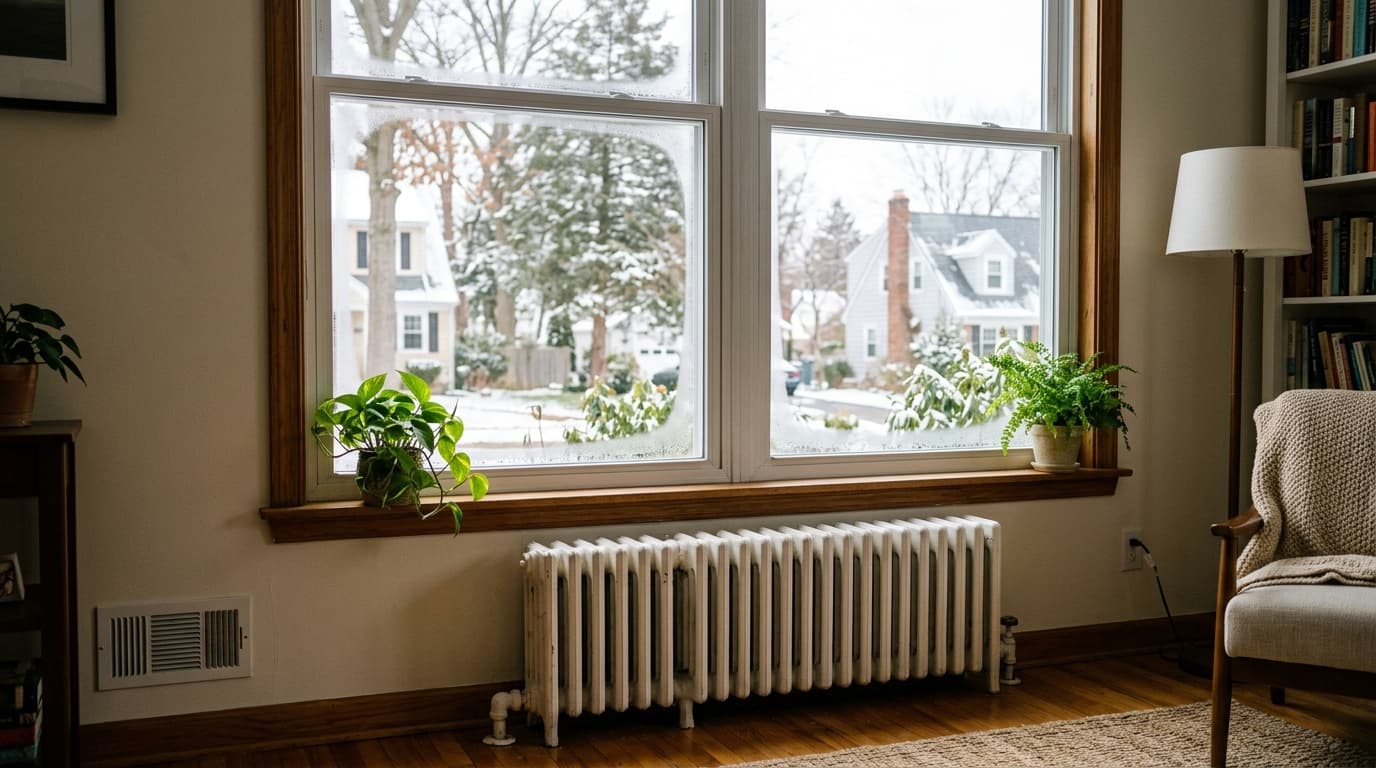
Record when the problem appears: after rain, during summer weather, after showers, when the HVAC runs, when the house is closed up, or when the basement is unused. Note musty odors, condensation, peeling paint, damp cardboard, swollen trim, staining, efflorescence, mold-like growth, and the rooms that feel clammy. Use a clean hygrometer in more than one location and record readings over several days rather than relying on one number beside a laundry area.
Trace water before selecting a machine. Check gutters and downspouts, grading, foundation walls, sump and drain details, plumbing, roof or siding transitions, crawl-space vents, and air-conditioning condensate. The EPA explains that moisture control is the key to mold prevention and recommends fixing leaks, drying wet materials promptly, and managing indoor humidity. Its mold and moisture guidance is a useful starting point, not a property-specific diagnosis.
If water is actively entering, materials are soft, or there is standing water, stop treating the issue as an equipment-shopping problem. Our storm-damage services can help coordinate a building review after an event, but emergency electrical, plumbing, mold, and structural conditions need the appropriate qualified professional.
Compare Portable, HVAC-Integrated, and Dedicated Whole-Home Options
A portable dehumidifier may be a practical test or a good fit for one room, especially when the source and drainage are controlled. Its limitations are regular emptying, local rather than whole-home air treatment, noise, floor space, and the risk that it stops when the tank fills. A portable unit also does not automatically dry a closed-off basement, crawl space, or upstairs room just because the door is open.
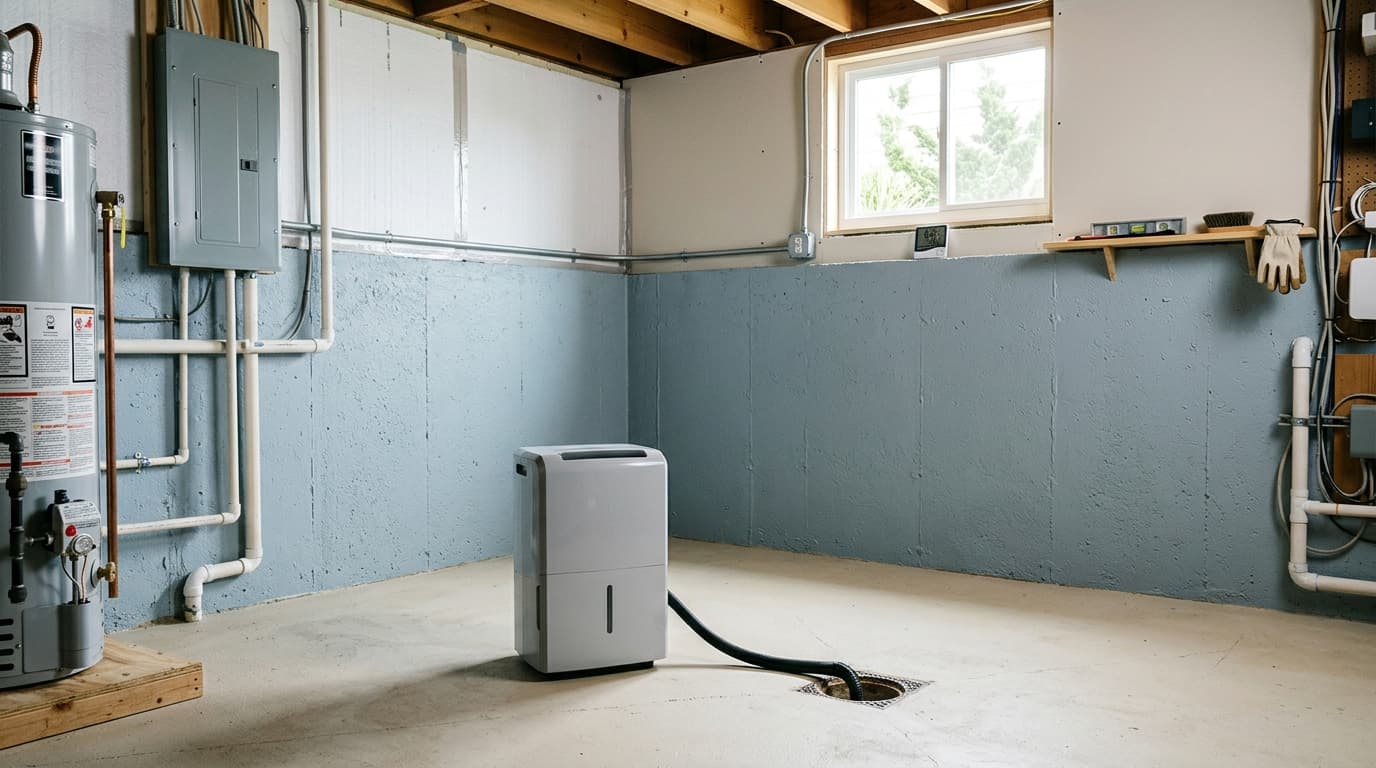
A whole-home unit can be installed in a basement, mechanical room, crawl-space-adjacent location, or ducted air path depending on the design. Some systems operate independently; others connect to return or supply ductwork. The proposal should explain where air is drawn from, where dry air goes, how the unit interacts with the HVAC blower, and whether the system can control humidity when the air conditioner is not running. Do not assume a central air conditioner will solve every shoulder-season moisture problem.
ENERGY STAR's dehumidifier guidance can help compare certified products and efficiency information. Product ratings are not a substitute for a room-by-room moisture diagnosis, correct installation, a reliable drain, or service access. Ask for the exact model and operating assumptions rather than accepting a generic equipment allowance.
Size the System Around the House and the Moisture Load
Capacity is not just a square-foot number. The installer should consider the conditioned volume, basement or crawl-space connection, foundation type, air leakage, insulation, occupancy, laundry and bathing patterns, HVAC operation, outdoor climate, moisture history, and whether the unit is expected to recover after a storm or construction event. A larger machine is not automatically better if it short-cycles, makes too much noise, overwhelms the drain, or is installed where service is difficult.
Ask how the stated capacity changes with temperature and humidity. Some equipment removes less water in cool basement conditions than its headline rating suggests. Ask for the control setpoint, expected operating range, sound information, electrical requirements, condensate rate, and what happens when the filter is dirty or the drain is blocked. The goal is stable moisture control without making the room uncomfortably dry or creating a new maintenance failure.
If the home has a crawl space, unfinished basement, finished basement, garage, or addition, the boundary between those areas matters. Sealing or conditioning one area can change pressure and moisture movement elsewhere. Our basement finishing services should be sequenced around moisture control, not used to hide a damp wall or install equipment behind inaccessible finishes.
Plan Condensate Drainage, Power, and Service Access
Condensate management is one of the most important parts of the installation. The proposal should show a gravity drain where feasible, a properly selected pump when needed, routing, slope, termination, trap or air-gap details as applicable, overflow protection, and how the drain will be tested and kept clean. Never discharge condensate onto a foundation, finished floor, crawl space, or area where it can create a new moisture problem.
Keep the filter, coil, fan, controls, pump, cleanout, electrical disconnect, and drain connections reachable. Do not bury a unit behind a wall or build storage around it so tightly that a technician must remove finishes for ordinary maintenance. Leave clearance for replacing the equipment and for inspecting the drain after a power outage or blocked-line alarm.
Electrical requirements depend on the exact model and location. A qualified electrician should review the circuit, protection, disconnect, grounding, condensate-pump power, and interaction with existing equipment. Do not run a permanent extension cord through a utility room or modify a panel yourself. New Jersey DCA's current construction-code resources and permit resources are starting points; the local construction official determines what applies to the address and scope.
Planning a project in South Jersey?
Get a free, detailed estimate from a licensed NJ contractor — no pressure, no sales pitch.
Coordinate the Dehumidifier with the Building Envelope and HVAC
A dehumidifier works best when the building is not continuously admitting avoidable moisture. Check foundation cracks, rim-joist air leakage, crawl-space openings, window wells, exterior doors, roof and siding details, duct leakage, and unsealed plumbing penetrations. Air sealing should not block required ventilation, combustion air, drainage paths, access panels, or emergency egress.
Review the HVAC system at the same time. A new unit can affect airflow, return paths, noise, condensate, and control strategy. Ask whether the equipment runs independently, whether the thermostat or humidistat can call for operation, whether the HVAC blower must run, and how the system behaves when the home is vacant. Do not close supply registers, block returns, or alter fuel-burning equipment to make a humidity problem appear solved.
If the project involves a roof leak, siding opening, window replacement, or exterior door, repair the envelope issue before relying on dehumidification. Our roofing services and general contracting team can coordinate related building work, but HVAC design and electrical connections should have clearly named qualified responsibilities.
What a Whole-Home Dehumidifier Quote Should Include
Compare a complete moisture-control system rather than a box and a promised humidity number:
- Diagnosis: Humidity readings, affected areas, water sources checked, and assumptions about the basement, crawl space, and HVAC.
- Equipment: Exact model, capacity conditions, controls, sound information, efficiency data, filter, and operating range.
- Air path: Ducted or standalone arrangement, intake and discharge locations, airflow, balancing, and interaction with the HVAC system.
- Drainage: Gravity drain or pump, slope, termination, overflow protection, testing, cleanout, and outage response.
- Power: Circuit, disconnect, protection, condensate-pump connection, and qualified-trade responsibility.
- Access: Filter, fan, coil, controls, drain, pump, service clearances, removal path, and protection from water or impact.
- Building work: Air sealing, foundation or roof repairs, insulation, framing, drywall, and finish restoration that are actually included.
- Closeout: Setpoint, commissioning readings, drain test, filter instructions, maintenance schedule, alarms, and what happens if humidity remains high.
A useful proposal identifies unknowns instead of promising that one unit will dry every room. For a home in Egg Harbor Township, Galloway, Absecon, or another South Jersey community, coastal air, older additions, crawl spaces, and flood or storm history may change the building review without changing the need for a documented drainage and service plan.
A South Jersey Humidity-Control Decision Checklist
Before approving equipment or enclosing the mechanical area, answer these questions in writing:
- Where and when is humidity high, and what do dated hygrometer readings show?
- Have bulk water, plumbing leaks, roof or siding issues, grading, foundation moisture, and crawl-space conditions been checked?
- Is a portable unit enough for one room, or does the home need coordinated whole-home air movement?
- What exact capacity, temperature range, sound level, electrical load, and control setpoint apply?
- Where will condensate go during normal operation, a blocked drain, and a power outage?
- Can the filter, coil, fan, pump, controls, disconnect, and drain be reached without removing finishes?
- How will the unit interact with HVAC airflow, combustion equipment, ventilation, and the building envelope?
- Who handles permits, electrical and HVAC work, testing, maintenance, and concealed conditions?
Do not open a wall around live wiring, enter an unsafe crawl space, disturb suspected mold or asbestos, alter gas equipment, or climb onto a roof to investigate moisture. If there is standing water, damaged electrical equipment, structural deterioration, or persistent mold-like growth, stop and obtain qualified help. Use our contact page to request a documented building-scope discussion before finishing or sealing the affected area.