How to Plan a Standby Generator for a South Jersey Home
The Short Answer: Plan the Loads, Location, and Safety Systems Together
The right standby generator for a South Jersey home depends on which circuits you need during an outage, what fuel is available, where equipment can be placed safely, and how the transfer equipment will connect to the home. A generator is not an extension cord with a larger engine. It is an electrical installation with fuel, exhaust, anchoring, clearances, controls, noise, maintenance, and local approval questions.
Start before the next forecasted storm. Decide whether the priority is refrigeration, heating controls, a sump pump, well equipment, medical equipment, internet, selected lighting, or most of the house. Our general contracting services can help coordinate site and building work, but a qualified electrician and the appropriate fuel professional must handle the regulated portions of the installation.
Choose What the Generator Must Actually Power
Make a written outage-load list instead of starting with a generator size from an advertisement. Separate essential loads from convenient loads: refrigerator and freezer, heating or cooling controls, sump pump, well pump, alarm and communications equipment, selected lighting, garage door opener, cooking equipment, and any medically necessary devices. Note which items have motors, compressors, heating elements, or startup surges; the running wattage alone may not describe what the system must handle.
Whole-house backup does not mean every appliance should operate at once. A load-management system may sequence or shed selected circuits, while a critical-load panel can keep the generator smaller and the installation more focused. Ask the electrician to show the proposed circuits, assumptions, starting loads, and what happens when several devices start together. Never connect a generator to a panel with an improvised backfeed cord.
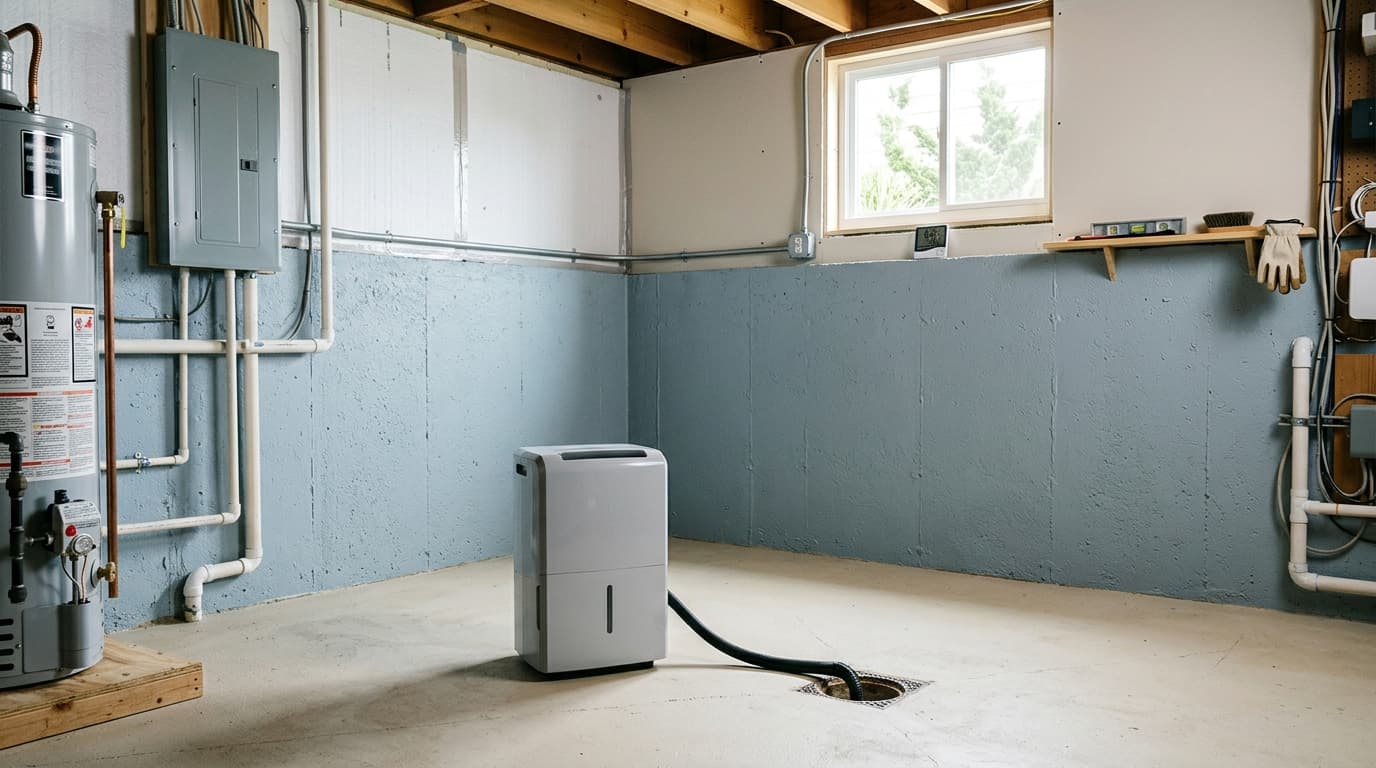
A generator can support a sump pump during an outage, but it does not replace a working discharge path, a backup pump strategy, or correction of foundation water. Our storm-damage services can help coordinate a post-event review when an outage and storm expose other building problems.
Compare Fuel and Generator Types Without Assuming One Is Best
Permanently installed standby systems commonly use natural gas or propane, while portable units may use gasoline or other fuels depending on the product. The choice affects storage, delivery, runtime, cold-weather readiness, utility dependence, noise, maintenance, and where the equipment can be located. A natural-gas connection is not automatically available at the required pressure or capacity, and a propane tank needs its own placement and service plan.
Ask what happens to the generator when the utility supply is interrupted, the propane tank is low, or the fuel system needs service. Confirm the manufacturer’s installation instructions, required clearances, exhaust direction, anchoring, weather protection, and sound expectations for the actual model. A larger unit is not automatically a better choice if it increases site, fuel, noise, or maintenance burdens beyond what the household needs.
Portable generators require a different safety plan. The Ready.gov power-outage guidance says generators must be used outdoors and away from doors, windows, and vents. The CDC carbon-monoxide guidance explains why fuel-burning equipment can create a deadly, odorless hazard. Never operate a generator in a basement, garage, crawl space, shed, or other enclosed or partly enclosed location.
Plan the Outdoor Location and Exhaust Path
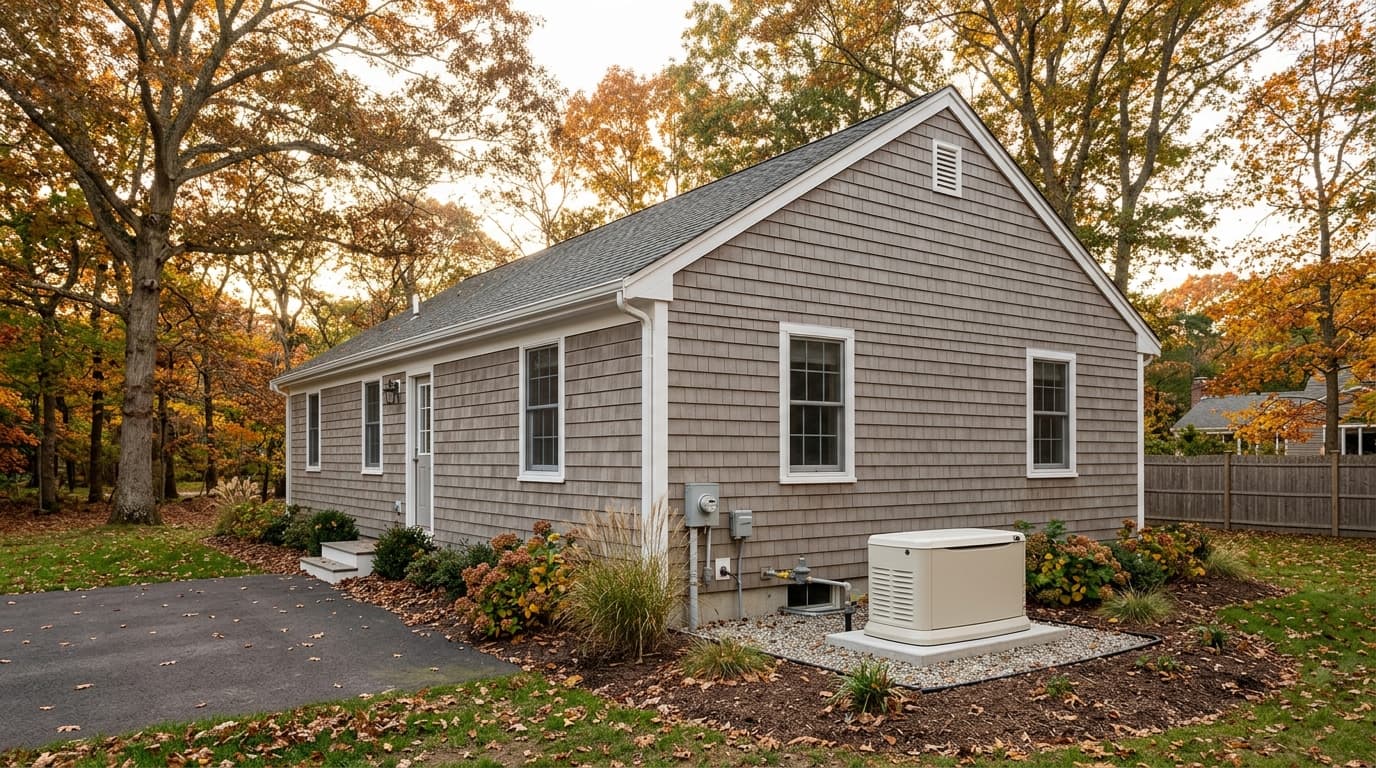
The generator location must work for combustion air, exhaust, service access, drainage, snow, landscaping, property constraints, and the people living nearby. Keep it away from doors, windows, vents, and air intakes as required by the manufacturer and applicable rules. Do not choose a spot merely because it is close to the electrical panel; the safest electrical route may not be the safest exhaust or service route.
Review the location after heavy rain and during a typical winter. Water should not collect around the pad, downspouts should not discharge toward the equipment, and snow removal should not block the exhaust or service area. Shore homes and exposed properties may need closer attention to wind-driven rain, salt air, corrosion, anchoring, and flood-related constraints. FEMA mapping can provide regional context, but it is not a property-specific generator siting approval.
Ask the installer to mark the equipment, pad, fuel route, electrical conduit, disconnects, transfer equipment, exhaust direction, maintenance clearances, and restoration work. If the route crosses roofing, siding, masonry, or finished areas, our roofing services or general contracting team can coordinate building-envelope repairs, but the electrical and fuel scopes should remain clearly assigned to qualified trades.
Planning a project in South Jersey?
Get a free, detailed estimate from a licensed NJ contractor — no pressure, no sales pitch.
Understand Transfer Equipment, Permits, and Inspections
The transfer switch or approved interconnection is what separates the home from the utility and directs generator power to the selected circuits. It should be sized and installed for the proposed load and coordinated with the main service, panels, disconnects, grounding and bonding, and any load-management equipment. The written proposal should identify who is responsible for utility coordination, electrical work, fuel work, startup, testing, and correction of failed inspections.
New Jersey requirements depend on the actual equipment, fuel connection, electrical alterations, site, municipality, and property conditions. NJ DCA’s Codes & Standards resources and construction permit resources are useful starting points, but the local construction official and utility determine what applies to your address. Do not accept “no permit needed” as a universal answer for a permanently installed system.
Never remove a panel cover, alter wiring, connect a generator, or modify a gas system as a DIY shortcut. The Egg Harbor Township, Galloway, and Ocean City examples illustrate why local site and utility conditions matter; the same generator model can require a different plan at another property.
A Standby Generator Quote Checklist
Compare complete installations rather than engine size or a single equipment price:
- Loads: Which circuits are backed up, what startup loads were calculated, and is load management included?
- Equipment: What exact model, output, controls, enclosure, warranty, and cold-weather accessories are specified?
- Fuel: Who verifies gas pressure or propane capacity, piping, regulators, shutoffs, and future service?
- Site: Where are the pad, clearances, exhaust, service access, drainage, snow storage, and property constraints shown?
- Electrical: What transfer switch, disconnects, panels, conduit, grounding, and utility coordination are included?
- Approvals: Who obtains permits, schedules inspections, coordinates the utility, and resolves corrections?
- Closeout: Who starts and tests the system, demonstrates the exercise cycle, records settings, and supplies manuals?
- Hidden conditions: What happens if the service, wiring, fuel route, pad area, or building finishes need unexpected work?
Ask for a maintenance plan, not just an installation date. The proposal should explain exercise frequency, oil and filter service, battery care, fuel checks, alarm notifications, winter inspection, and who responds if the generator fails to start. Keep the generator and transfer equipment accessible after landscaping, storage, siding, or other work is completed.
Test the System and Keep the Rest of the Home Safe
A standby generator is only useful if it starts, transfers safely, powers the intended circuits, and returns to normal utility service without leaving a hazard. Follow the manufacturer’s exercise and maintenance instructions, keep service records, and have the system inspected after electrical, fuel, flood, lightning, or impact damage. Do not silence an alarm without finding out why it occurred.
Keep carbon-monoxide alarms working in the home, maintain clear exits, and tell every household member how to recognize an outage, avoid unsafe portable-generator use, and contact emergency services. During a storm, do not approach equipment in floodwater or handle wet electrical components. If the generator pad, fuel system, wiring, or panel is damaged, wait for qualified professionals.
For a South Jersey home, the best plan is the one that documents essential loads, safe placement, transfer equipment, approvals, maintenance, and emergency procedures before the outage. Use our contact page to request a coordinated building-scope discussion, and ask the licensed electrical and fuel professionals to put their responsibilities in writing.