How to Choose an Exterior Door for a South Jersey Home
The Short Answer: Match the Door to the Opening and Exposure
To choose an exterior door for a South Jersey home, start with the problem the opening must solve: drafts, water intrusion, difficult operation, security, noise, appearance, or a combination of these. Then compare the door material, glass package, sill, weather seals, hardware, and installation method as one system. A high-performance slab cannot make up for a rotten frame, an unlevel threshold, or missing flashing around the opening.
An inland front entry, a wind-driven-rain exposure, and a door near the beach do not face the same conditions. Homes in Egg Harbor Township may prioritize energy performance and everyday durability, while an entry in Ocean City or Margate may need closer attention to wind, salt air, corrosion-resistant hardware, and water management. The right selection is the one whose specifications and installation details fit the actual opening and location.
Fiberglass, Steel, or Wood: Compare the Whole Door System
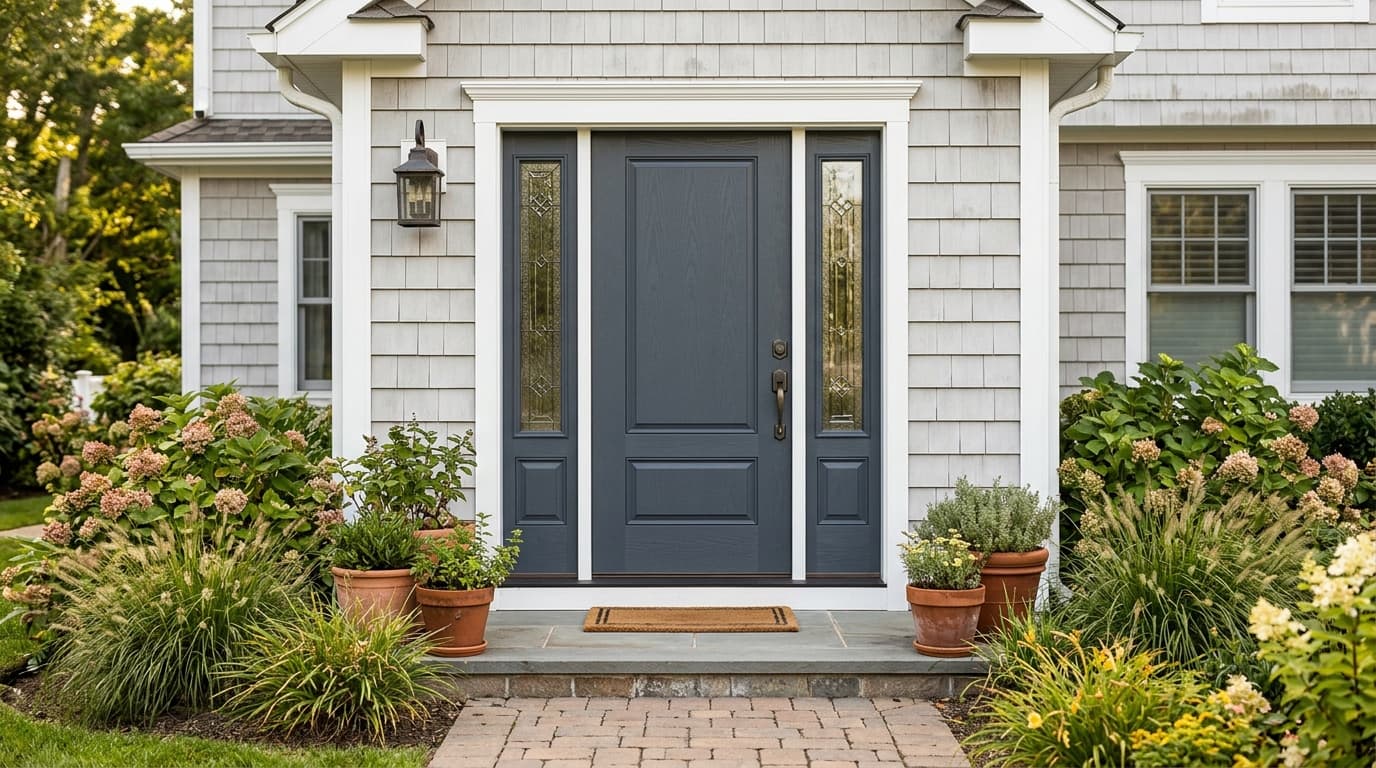
Fiberglass is often a versatile choice for a primary entry because it can imitate painted or stained wood, resists routine moisture exposure, and is available with insulated cores. Compare the construction behind the finish, the warranty exclusions, the threshold, and the quality of the frame rather than assuming every fiberglass door performs the same way. Fiberglass still needs protected joints, sound sealant, and maintenance of its finish.
Steelcan provide a rigid, secure-feeling entry at a lower material cost, especially when paired with an insulated core. Its weak points are usually the edges, finish, and areas where water reaches exposed metal. A dent or breach in the coating should be repaired according to the manufacturer's instructions. Near salt air, ask whether the sill, fasteners, hinges, strike hardware, and other exposed components are appropriate for the environment.
Wood offers a distinctive appearance and can suit a historic or design-led renovation, but it is a maintenance commitment. The finish, bottom edge, jambs, and transitions need regular inspection because repeated wetting can lead to swelling or paint failure. If you select wood, ask who will maintain it, how the sill sheds water, and what the warranty requires. Our window and door services can coordinate a door replacement with adjacent trim and cladding so the opening is not treated as an isolated slab swap.
Choose Glass for Privacy, Light, and Heat Gain
Glass changes the comfort and privacy of an entry. Clear glass brings daylight but can expose the foyer; textured, frosted, or privacy glass changes visibility without eliminating natural light. Decorative glass should still be evaluated for insulation, safety glazing, and cleaning requirements. If the entry faces strong afternoon sun, ask how the glass package affects solar heat and fading rather than choosing only by appearance.
Request the complete performance information for the exact door-and-glass configuration. The National Fenestration Rating Council label guidance explains how performance labels help homeowners compare fenestration products. U-factor, solar heat gain, visible transmittance, and air-leakage information are more useful than a generic claim such as “energy efficient.” Results also depend on the frame, weather stripping, installation, shading, and the rest of the wall assembly.
South Jersey Details: Water, Wind, and Salt Air
An exterior door is part of the home's water-resistive barrier. Wind-driven rain can enter at the sill, jambs, head flashing, trim, or the transition to siding even when the door slab itself is sound. A quote should explain how the installer will protect the rough opening, integrate flashing with the existing wall, insulate gaps, set the sill, and seal the exterior trim. The Building America air-sealing guidance is useful background for understanding why a visible gap around a door can affect comfort and moisture control.
For an exposed shore property, ask about wind-performance documentation, corrosion-resistant hardware, threshold drainage, and the manufacturer's coastal exclusions. Do not assume that a product sold in South Jersey has the same suitability at every address. If flooding is a concern, use FEMA flood-map resources as context, then obtain a property-specific review. A replacement door does not by itself floodproof an opening or solve elevation, drainage, or insurance issues.
New Jersey code and permit questions should be confirmed for the actual property and scope with the local construction official. The state's DCA Codes & Standards resources are a useful starting point, but a contractor should not promise that every door replacement is permit-free or code-identical.
Planning a project in South Jersey?
Get a free, detailed estimate from a licensed NJ contractor — no pressure, no sales pitch.
What a Door Replacement Quote Should Include
“Install one exterior door” is not enough detail to compare proposals. Ask the contractor to identify the manufacturer and series, slab material, frame material, handing, size, swing, glass package, color, hardware, threshold, weather stripping, and warranty. The scope should also describe removal and disposal, protection of the opening, flashing or sill-pan details, insulation, interior casing, exterior trim, siding repair, painting or staining, cleanup, and final adjustment.
- Condition: How will the installer check for rot, insect damage, or an out-of-square opening?
- Water management: How will the sill, jambs, head, flashing, and siding transition be tied together?
- Performance: What are the exact air, thermal, glass, and wind ratings for this configuration?
- Hardware: Are hinges, locks, screws, and finish appropriate for the exposure and door weight?
- Hidden work: What happens if damaged framing or a failed weather barrier is found after removal?
- Closeout: Will the door be adjusted, weather-tested visually, and delivered with care instructions and warranty documents?
A Four-Question Door Decision Framework
Use four questions before choosing a model. What failed? Separate the slab, frame, sill, hardware, flashing, and surrounding wall so you do not replace the visible part while leaving the leak behind. How exposed is the opening? Identify shore wind, salt air, driving rain, direct sun, and flood-related concerns. How will the door be used? A busy rear entry, a formal front entry, and a seasonal shore rental may need different glass, hardware, durability, and maintenance priorities. Can the installer explain the transition? The proposal should show how the new door connects to the existing weather barrier and finish materials.
If the budget does not allow every opening to be replaced, start with the door that has the clearest failure or the greatest exposure. Coordinate colors, hardware finishes, trim profiles, and future siding or window work before ordering. For a South Jersey scope review, use our contact page and bring photos of the interior trim, exterior cladding, threshold, and any water staining. A clear diagnosis is more valuable than choosing a door from a showroom wall without understanding the opening.