Signs You Need a New Roof: A South Jersey Homeowner's Checklist
Age-Based Guide: How Long Should a Roof Last?
Age is the single most reliable predictor of a roof's remaining useful life. Standard architectural asphalt shingles installed in South Jersey are rated for 25 to 30 years under normal conditions—but "normal" does not describe the coastal environment. Salt air accelerates oxidation of asphalt, UV intensity is higher near the water, and annual nor'easter activity subjects roofing to wind loading that inland homes rarely experience. In practice, asphalt roofs on barrier-island homes in communities like Margate and Brigantine often reach end of life at 20 to 22 years rather than the rated 25 to 30.
If your roof is approaching or past the 20-year mark, begin planning for replacement regardless of visible symptoms. The degradation that leads to leaks often happens below the surface—in the underlayment, around flashings, and at the decking level— before it becomes apparent from the ground. Waiting for an active leak to appear before addressing an aging roof typically means water has already compromised the decking and potentially the interior structure, adding thousands in remediation cost to what should have been a straightforward re-roof.
If you do not know your roof's installation date, check your homeowner's disclosure documents from purchase, pull the permit history from your municipality's building department, or have a contractor perform a physical inspection. Our roofing services include a detailed inspection report that documents current condition and estimated remaining useful life—giving you a data-based timeline rather than a guess.
Visual Warning Signs: What to Look For from the Ground
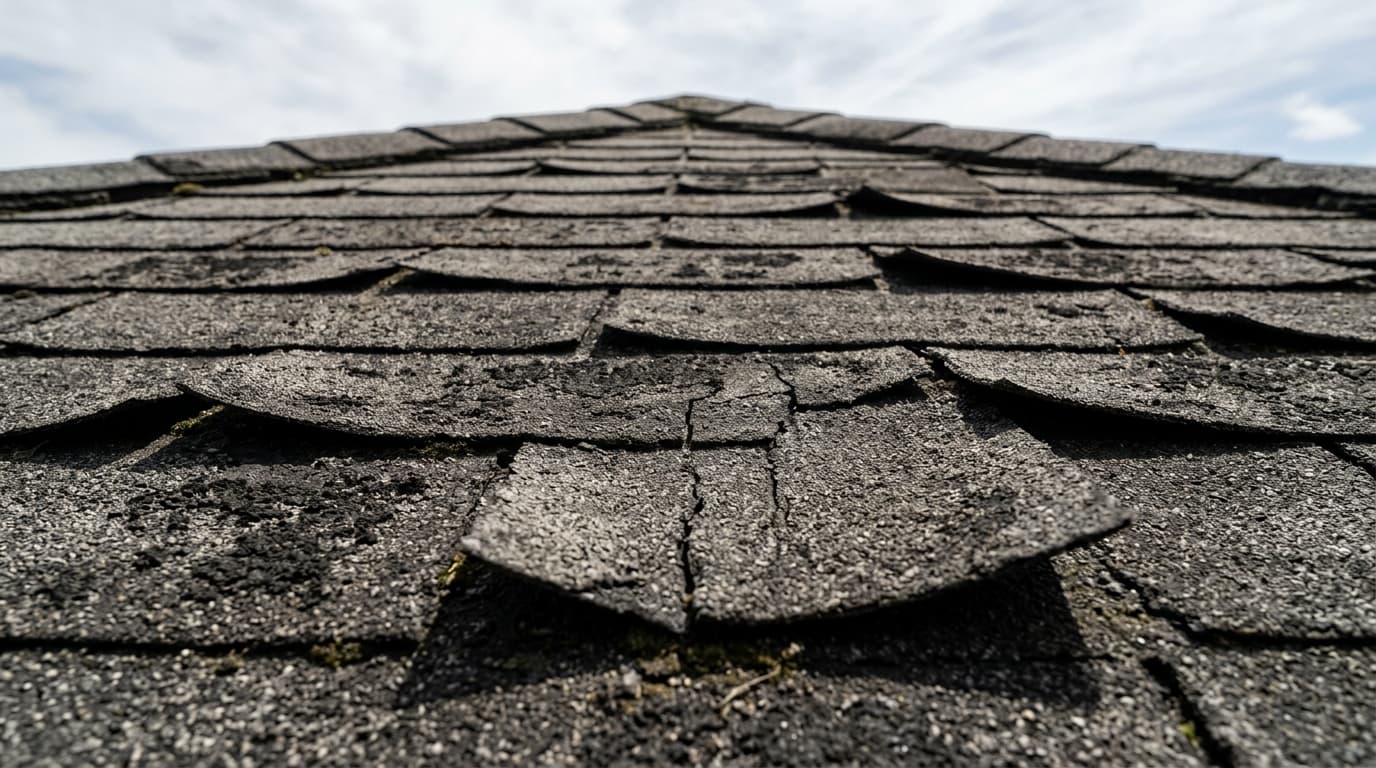
Curling or cupping shingles are one of the earliest and most visible signs that an asphalt roof is nearing end of life. Curling (edges turning upward) and cupping (center of the shingle bowing up) both indicate that the asphalt has dried out and the shingle is no longer lying flat against the deck. Curled shingles are vulnerable to wind lift and allow water infiltration at the edges. Granule loss is equally telling—check your gutters and downspout discharge areas after a rain. Heavy granule accumulation means the shingle surface is wearing through, and once the underlying mat is exposed, UV degradation accelerates rapidly.
Sagging areas anywhere on the roofline signal a structural problem that goes beyond shingle replacement. Sagging is typically caused by rotted decking, compromised rafters, or a failed ridge board—all of which require structural repair, not just a new surface layer. If you notice any section of the roofline that dips or feels soft when walked on, treat it as an emergency inspection. Daylight visible in the attic during the day means the roof surface has actual gaps—look for light penetrating at the eaves, ridge, or around any penetration (chimney, plumbing vent, HVAC stack). These are active leak pathways, not future concerns.
Also inspect the flashings around chimneys, skylights, and any vertical wall intersections. Flashing failure—lifted, cracked, or separated metal where the roof meets another surface—is the leading cause of localized leaks on roofs that are otherwise in reasonable condition. Flashing repairs on an otherwise sound roof are often worth doing; flashing failure on a 20-year-old roof is often the tipping point that makes full replacement the smarter investment.
Storm Damage Signs: After Nor'easters and Hurricanes
South Jersey's storm exposure is among the highest in the Northeast. Nor'easters between October and April can sustain winds of 50 to 70 mph for 12 to 24 hours, and coastal communities in Atlantic County see direct hurricane impacts every decade or so. After any significant storm event, a visual inspection—even from the ground with binoculars—should be your first step. Look for missing shingles (bare patches of dark decking visible from the street), lifted tab lines (sections of shingles that have broken their seal and are standing up), and displaced ridge cap (the capping along the peak of the roof is a common first casualty in high wind).
Hail damage in South Jersey is less frequent than in the Midwest but does occur during severe summer thunderstorm systems. Hail impact creates circular dents or bruises on asphalt shingles—visible as soft spots when pressed—and can crack ridge cap and exposed flashings. Unlike wind damage, hail damage is often not visible from the ground and requires a physical inspection to document. If you suspect hail damage after a storm, do not delay—most homeowners insurance policies require timely reporting of storm-related damage, and delays can complicate or void your claim.
Planning a project in South Jersey?
Get a free, detailed estimate from a licensed NJ contractor — no pressure, no sales pitch.
When to Repair vs. Replace
Repair is the right call when damage is isolated and the surrounding field of shingles is sound. Replacing a few missing shingles, re-sealing lifted flashings, or patching a single damaged valley typically costs $400 to $1,500 and can extend a roof's useful life by several years—provided the roof is under 15 years old and the rest of the surface shows no systemic deterioration. The critical test is whether the repair addresses the entire problem or only the visible symptom.
Replacement becomes the better financial decision when the roof is over 20 years old, when damage affects more than 25 to 30 percent of the surface, or when the underlying decking is compromised. A partial re-roof—replacing only the damaged section—is technically possible but rarely advisable on an aging roof, because the mismatched age of old and new sections creates differential performance and the overall roof will still fail within a few years. At that point you have paid twice. If your insurance adjuster approves a partial repair but your contractor identifies systemic degradation across the whole surface, get a second professional opinion before accepting a partial scope.
Scheduling Your Inspection
The best time to schedule a roof inspection is before you have a leak—ideally in late summer or early fall before nor'easter season, or in spring after winter storm activity has concluded. Proactive inspections give you time to plan a replacement on your schedule rather than as an emergency, which means better contractor availability, more material choices, and no water damage compounding the project scope.
Synergy performs thorough roof inspections that go beyond the surface—we check the attic for moisture staining, evaluate ventilation adequacy, probe the decking for soft spots, and document flashing conditions at every penetration. You receive a written report with photographs, a condition assessment, and a frank recommendation: repair, plan for replacement, or replace now. There is no pressure to proceed, and the inspection is provided at no charge as part of our estimating process. Contact us at our contact page to schedule.