How Much Does Siding Replacement Cost in NJ
Siding Replacement Costs in NJ: What to Expect
Replacing the siding on a typical New Jersey home costs between $6,000 and $30,000 in 2026, with most projects falling in the $10,000–$20,000 range. The primary cost variables are material choice, home size, and whether the project includes removing existing siding, replacing sheathing, or adding house wrap and insulation board. Our siding services cover installation of all major cladding types, with particular expertise in coastal applications where material selection is critical.
Labor in New Jersey runs $2–$5 per square foot depending on the material and installation complexity. Homes with significant trim detail, multiple dormers, or second-story work requiring staging add to the labor cost. Most NJ siding projects also benefit from adding rigid foam insulation board behind the new siding—a step that improves energy performance and adds $1,500–$4,000 to the project but pays back through lower heating and cooling costs over time.
Cost by Material
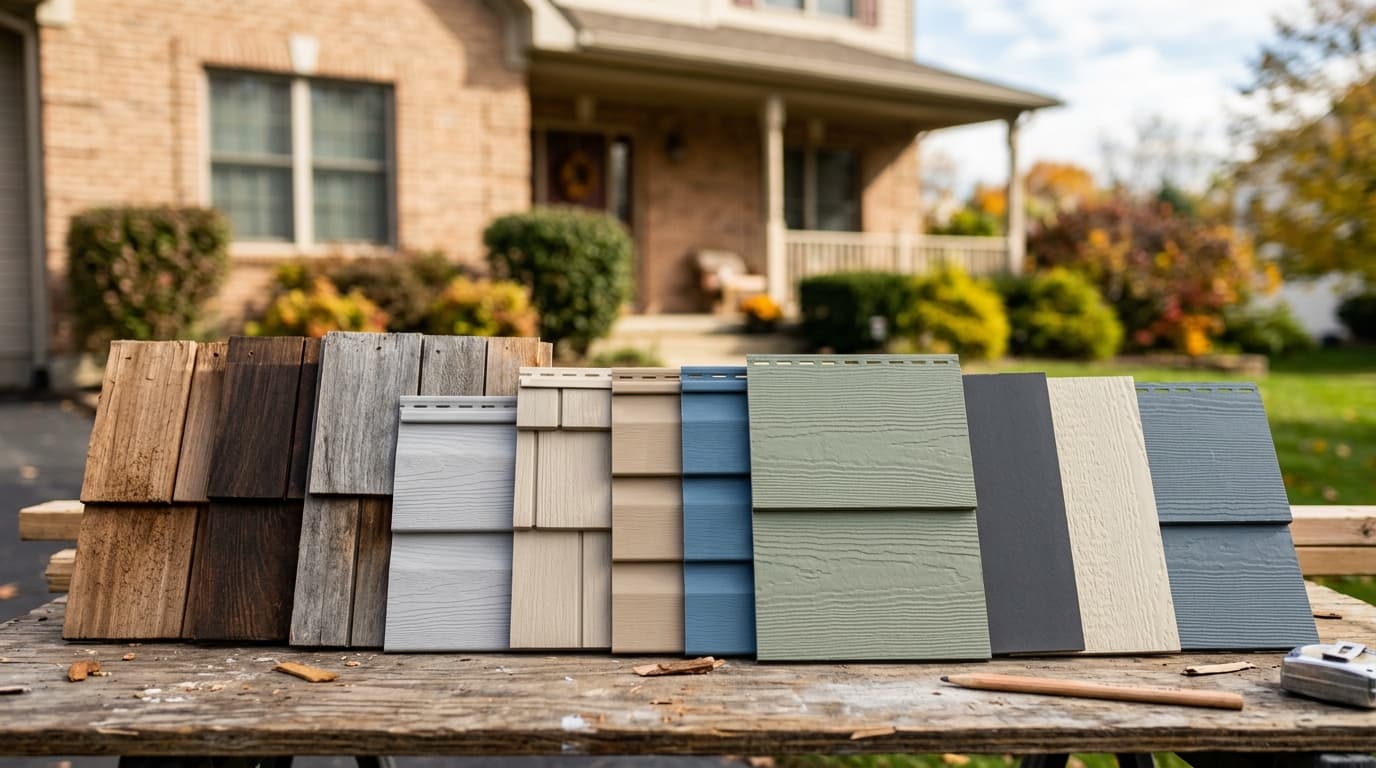
Vinyl siding ($6,000–$15,000) remains the most common choice in New Jersey because of its low cost, minimal maintenance, and wide availability. Modern vinyl has improved significantly—insulated vinyl (with foam backing) provides better rigidity and thermal performance than standard hollow-back panels. Vinyl is appropriate for inland South Jersey homes in communities like Egg Harbor Township and Galloway but requires careful selection for salt-air environments; thicker panels and higher wind ratings are essential within a mile of the ocean.
Fiber cement siding ($12,000–$25,000)—James Hardie being the most recognized brand—has become the premium choice for New Jersey homeowners seeking durability and a wood-like aesthetic. Fiber cement is highly resistant to moisture, rot, insects, and salt air, making it well-suited for shore communities like Margate and Brigantine. It holds paint well, carries strong wind resistance ratings, and qualifies for many homeowners insurance discounts in coastal zones. The higher material and labor cost (fiber cement is heavier and requires specialized installation) is offset by its 50-year expected lifespan.
Wood siding ($15,000–$30,000)—cedar shakes, clapboard, or shiplap— delivers the most authentic traditional appearance and is common in historic shore towns and custom coastal homes. Wood requires the most maintenance of any cladding type: painting or staining every 5–8 years, periodic inspection for rot, and careful sealing at all joints. In salt-air environments, maintenance frequency increases. The higher upfront cost and ongoing maintenance make wood a choice driven by aesthetics and historic appropriateness rather than economics alone.
Best Siding Materials for Shore Homes
Shore-area homes in communities like Margate and Brigantine face conditions that demand careful material selection: salt air accelerates corrosion and paint degradation, nor'easters generate sustained winds exceeding 60 mph, and high humidity stresses any material that is not inherently moisture-resistant. For these environments, fiber cement is the top recommendation because it addresses all three challenges directly. Its salt resistance is inherent to the material, its wind ratings meet or exceed coastal building codes, and it will not swell, rot, or warp from moisture exposure.
If vinyl is the budget choice for a shore home, specify minimum .044-inch thick panels with wind resistance ratings of at least 110 mph. Many barrier-island municipalities in Atlantic County now require siding that meets specific wind uplift standards—check local codes before selecting material. Insulated vinyl provides better rigidity and wind performance than standard vinyl at a modest cost premium. Avoid thin economy-grade panels in any coastal application; they will fade, warp, and fail faster than the warranty period in a salt-air environment.
Planning a project in South Jersey?
Get a free, detailed estimate from a licensed NJ contractor — no pressure, no sales pitch.
Energy Savings & ROI
Siding replacement consistently ranks among the top home improvement projects for return on investment nationally, and New Jersey's housing market reinforces that data. New siding addresses two buyer concerns simultaneously: curb appeal and structural integrity. A home with failing, faded, or damaged siding signals deferred maintenance and raises buyer concern about what else has been neglected. New siding eliminates that signal and meaningfully improves first impressions.
Adding continuous insulation board (1-inch rigid foam) behind new siding improves a wall assembly's effective R-value from roughly R-13 to R-18 or better, reducing heating and cooling loads measurably. In NJ homes with older fiberglass batt insulation in the walls, this exterior layer addresses thermal bridging through studs—a heat loss path that batt insulation alone cannot address. The energy payback period on insulation board is typically 5–8 years, after which the savings are cumulative.
Choosing a Siding Contractor in NJ
New Jersey requires siding contractors to hold a valid Home Improvement Contractor (HIC) registration through the NJ Division of Consumer Affairs. Verify your contractor's HIC number before signing any contract—it takes 30 seconds to confirm at the state's online registry and protects you legally if a dispute arises. In addition to HIC registration, the contractor should carry general liability insurance (minimum $1 million per occurrence) and workers' compensation coverage; ask for certificates of insurance and verify they are current.
For fiber cement installation, ask whether the crew is factory-trained and certified by the manufacturer. James Hardie, for example, certifies preferred contractors who complete product-specific training—installation errors that void the warranty are common with crews unfamiliar with fiber cement's specific fastening, sealing, and joint requirements. Synergy's siding crews are trained in fiber cement installation and familiar with the coastal building code requirements that apply in Atlantic and Cape May counties.